

Protecting Your Vehicle in Baltimore County: Why Factory Alarms Aren’t Enough
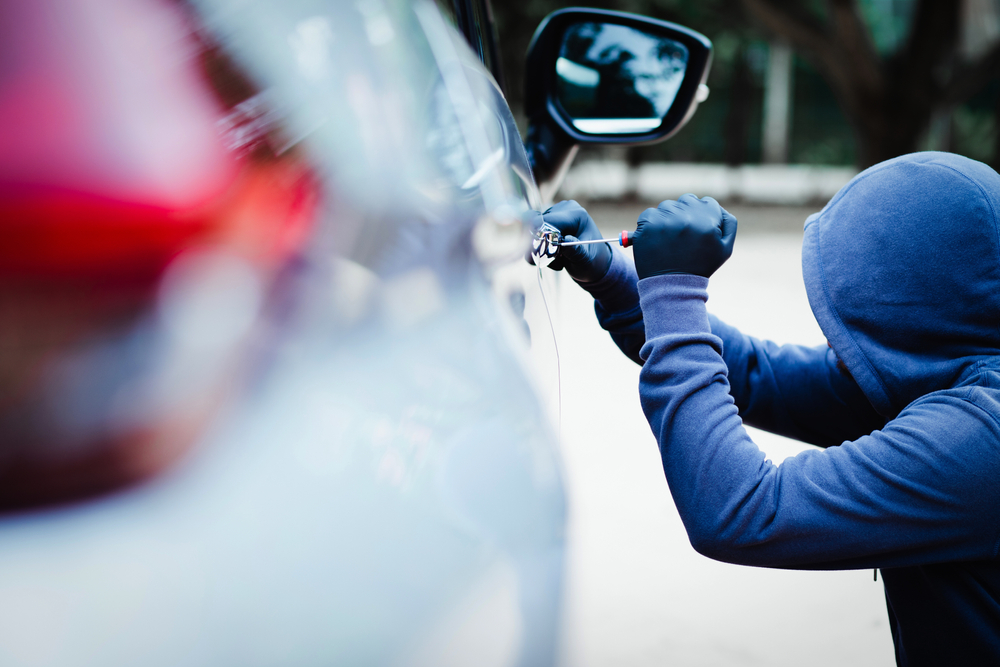
A locked vehicle with a factory alarm can still be vulnerable in Baltimore County. Whether you park overnight outside a Towson apartment, in a driveway in Parkville, near a shopping center in White Marsh, or on a residential street closer to Baltimore City, factory security should be viewed as one layer of protection rather than the entire security system.
Quick answer: Factory alarms are useful, but they are mainly designed to detect certain types of unauthorized entry and draw attention with lights or sound. They do not necessarily prevent a thief from starting, moving, towing, or locating a vehicle. Layering an alarm with immobilization, visible deterrents, and vehicle recovery technology can make a vehicle harder to steal and easier to locate if a theft occurs.
What local drivers should know
-
A factory alarm can alert people to a break-in attempt, but an audible alarm by itself does not physically immobilize a vehicle.
-
Maryland State Police recommends multiple theft-prevention measures, including locking vehicles, removing keys and valuables, parking in well-lit areas, and using anti-theft devices.
-
Drivers around Towson, Dundalk, Essex, Catonsville, and other Baltimore County communities should consider where and how their vehicles are parked when choosing added security.
-
Immobilizers and recovery systems serve different purposes, so the best setup may combine more than one type of protection.
-
Even good electronic security works best alongside simple habits such as taking the key fob, closing windows, and never leaving a running vehicle unattended.
Why Aren’t Factory Car Alarms Enough?
Factory car alarms aren’t enough because they generally focus on detecting unauthorized entry rather than preventing every method of vehicle theft. A horn or flashing lights may discourage some attempts, but stronger protection can also include systems that interfere with unauthorized starting, provide additional warning, or help locate a stolen vehicle.
Modern vehicles can have sophisticated factory security, and the exact features vary by make, model, trim level, and year. Some include engine immobilizers or other electronic safeguards in addition to an alarm. That is why Baltimore County drivers should understand what their particular vehicle already has before adding aftermarket equipment.
The goal is not to replace useful factory technology. It is to identify gaps and create several layers a thief would have to defeat.
Why Does Vehicle Security Matter in Baltimore County?
Vehicle security matters in Baltimore County because auto theft remains an active concern across Maryland and the greater Baltimore region. Maryland’s Vehicle Theft Prevention Council continues to fund enforcement and prevention efforts in the Baltimore metropolitan area, including Baltimore County.
Maryland State Police reported in July 2026 that a vehicle was being stolen somewhere in the state approximately every 27 minutes. The agency also reported that many stolen vehicles had been left unlocked or contained a key or fob, reinforcing the importance of combining technology with basic prevention habits.
Local parking situations vary widely. A driver near downtown Towson may depend on a parking garage, while someone in Perry Hall may park in a driveway. Residents in Dundalk, Essex, or Catonsville may use streets, apartment lots, townhome parking areas, or commercial lots. Different environments create different security considerations.
Sound Solutions, Inc. serves vehicle owners in the Baltimore, Maryland area. When we discuss vehicle security, the starting point is understanding the vehicle, the existing factory equipment, and how the owner actually uses and parks it.
What Do Maryland Vehicle Theft Data Tell Local Drivers?
Maryland vehicle theft information shows that basic prevention and additional anti-theft equipment both have roles in protecting a vehicle. Maryland State Police identifies audible or visible deterrents, immobilizing devices, and vehicle recovery systems as distinct categories of anti-theft protection.
That distinction matters.
An audible device is intended to draw attention.
An immobilizing device is intended to make unauthorized operation more difficult.
A recovery system is intended to help locate a vehicle after it has been stolen.
For Baltimore County drivers, these technologies should not automatically be treated as substitutes for one another. They solve different parts of the same problem.
How Can Vehicle Theft Affect Baltimore County Drivers?
Vehicle theft can affect Baltimore County drivers through lost transportation, insurance claims, missed work, towing and recovery complications, and the potential loss of personal belongings. Even an unsuccessful break-in can leave damaged locks, windows, ignition components, wiring, or interior trim.
The disruption can be especially frustrating for commuters traveling between communities such as Towson, Owings Mills, Catonsville, and Baltimore City.
Vehicle security therefore is not only about the replacement value of a car. It is also about reducing the chance that someone can quickly access or remove something you depend on every day.
What Warning Signs Suggest You Need Better Vehicle Security?
Signs that you may need additional vehicle security include relying exclusively on one factory feature, regularly parking outdoors, or owning a vehicle with security features you do not fully understand.
Consider reviewing your setup if:
-
Your only theft deterrent is the original audible alarm.
-
You are unsure whether your vehicle has an engine immobilizer.
-
You regularly park overnight on the street or in an open lot.
-
Your parking space is isolated or poorly visible at night.
-
You frequently park in different locations around Baltimore County or Baltimore City.
-
You keep valuable tools or equipment in the vehicle.
-
You have experienced a previous break-in or attempted theft.
-
You want a way to locate the vehicle if prevention measures fail.
None of these situations means a theft will occur. They simply provide a reason to assess whether the existing layers match the way the vehicle is used.
When Should You Call a Vehicle Security Professional?
You should call a vehicle security professional when you want protection beyond basic physical deterrents or need electronic equipment integrated correctly with your vehicle. Modern electrical systems can be complex, so alarm, immobilization, remote-start, and tracking components must be selected and installed with the specific vehicle in mind.
Baltimore-area drivers can safely handle many basic precautions themselves. Lock the doors, close the windows, remove valuables, take the keys or fob, and choose visible parking whenever possible.
Professional help becomes more appropriate when wiring, control modules, sensors, ignition-related functions, or integrated security systems are involved.
What Are the Most Common Gaps in Factory Vehicle Security?
The most common gaps in factory vehicle security involve depending on one type of deterrent to handle every possible theft method. A factory system may be useful, but the strongest approach generally uses different layers with different purposes.
1. Audible protection without immobilization
Noise can attract attention, but noise alone does not necessarily keep a vehicle from moving.
2. Immobilization without recovery capability
A vehicle may have technology intended to prevent unauthorized starting but provide no additional location capability if the vehicle is taken another way.
3. Recovery technology without prevention
Tracking can be valuable after theft, but it should not replace basic steps intended to deter the theft in the first place.
4. Good technology paired with poor habits
Leaving doors unlocked, keys inside, windows open, or valuables visible can undermine an otherwise thoughtful security setup. Maryland State Police specifically recommends taking keys or fobs, closing and locking windows and doors, removing valuables, and using anti-theft devices.
How Can Baltimore County Drivers Reduce Vehicle Theft Risk?
Baltimore County drivers can reduce vehicle theft risk by combining consistent parking habits with several complementary security measures. The simplest improvements cost nothing, while electronic upgrades can add additional layers when the vehicle and parking situation justify them.
Start with these habits:
-
Take every key and fob with you.
-
Lock the vehicle every time, including when it is parked at home.
-
Close the windows completely.
-
Avoid leaving the vehicle running unattended.
-
Keep bags, electronics, garage door controls, documents, and other valuables out of sight.
-
Choose visible, well-lighted parking when possible.
-
Consider a visible physical deterrent.
-
Determine whether additional alarm, immobilization, or vehicle-location capability makes sense for your vehicle.
Summer deserves particular attention. Maryland State Police has specifically highlighted increased vehicle-theft concerns during the summer period, making it a useful time for local drivers to review their security habits.
What Results Can You Expect From an Upgraded Vehicle Security System?
An upgraded vehicle security system can add layers that make unauthorized access or operation more difficult and may improve the ability to respond if theft occurs. The exact result depends on the equipment chosen, how it is installed, the vehicle, and the type of theft attempt.
No alarm or anti-theft device can make a car impossible to steal.
A more realistic goal is to create obstacles. An attempted thief may encounter a visible deterrent, an alarm response, an immobilization feature, or another layer rather than one factory system standing alone.
For local drivers who depend on their vehicles for commuting around the Baltimore region, that layered approach can provide more complete protection.
What Vehicle Security Mistakes Should Baltimore Drivers Avoid?
The biggest vehicle security mistakes come from assuming one device solves every risk and overlooking simple daily habits.
Mistake: Assuming a flashing security light means the vehicle has every available protection.
Consequence: You may overestimate what the factory system actually does.
Better approach: Confirm the vehicle’s factory alarm and immobilizer features before deciding whether an upgrade is useful.
Mistake: Hiding valuables but leaving the doors unlocked.
Consequence: An unlocked vehicle removes an important barrier.
Better approach: Remove valuables when possible and lock the vehicle consistently.
Mistake: Buying security equipment without considering compatibility.
Consequence: Modern vehicle electronics can make improper equipment selection or installation problematic.
Better approach: Match electronic upgrades to the specific make, model, year, and existing equipment.
Mistake: Depending only on tracking.
Consequence: Tracking addresses recovery rather than preventing the initial theft attempt.
Better approach: Combine recovery capability with deterrence and prevention.
What Is a Common Baltimore County Vehicle Security Scenario?
A common Baltimore County scenario is a household that has traditionally relied on factory keyless entry and the original alarm because the vehicle is usually parked in a driveway. The owner begins spending more time parking in public lots around Towson, White Marsh, or Baltimore City and realizes the vehicle now faces a wider range of parking environments.
A security review might begin by confirming the vehicle’s existing factory protections. From there, the owner can consider whether an additional alarm feature, immobilization layer, physical deterrent, or recovery option would address an actual gap.
That is a security assessment, not a case study. The right solution depends on the individual vehicle and driver.
What Vehicle Security Solutions Can Add Protection?
Vehicle security solutions can add protection through better detection, deterrence, immobilization, or recovery capability. The most appropriate combination depends on what the factory system already provides and which vulnerabilities the owner wants to address.
Potential options can include:
-
Aftermarket vehicle alarm systems
-
Additional sensors or alert features
-
Immobilization-related security
-
Vehicle tracking or recovery technology
-
Visible physical deterrents
-
Professionally integrated combinations of compatible equipment
At Sound Solutions, Inc., we can help local drivers explore vehicle security options based on their vehicle and priorities without assuming every car needs the same package.
How Do Factory Alarms and Layered Security Compare?
Factory alarms and layered security differ mainly in scope. A factory system provides the protection included by the manufacturer, while a layered approach can combine multiple technologies and physical precautions to address detection, prevention, and recovery separately.
| Option | Main Role | Limitation |
|---|---|---|
| Factory alarm | Detects certain unauthorized entry conditions | Features vary significantly by vehicle |
| Physical deterrent | Creates a visible or mechanical obstacle | Usually protects against specific methods |
| Immobilization | Makes unauthorized vehicle operation more difficult | Does not necessarily provide recovery information |
| Tracking or recovery technology | Helps determine vehicle location | Primarily useful after the vehicle is taken |
| Layered system | Combines multiple forms of protection | Requires careful equipment selection and installation |
For many drivers, the question is not factory security or aftermarket security. The better question is which useful layers the vehicle already has and which are missing.
Where Do We Help Drivers With Vehicle Security?
We help vehicle owners in Baltimore and the surrounding Baltimore County area explore security solutions suited to their cars, trucks, parking conditions, and daily routines. Drivers from communities such as Towson, Parkville, Perry Hall, Dundalk, Essex, White Marsh, Catonsville, and Owings Mills may face different parking situations even within the same region.
What Can Happen If You Ignore Vehicle Security Gaps?
Ignoring vehicle security gaps can leave a driver dependent on a single layer that was never intended to address every theft method. The potential consequences include theft, break-in damage, lost property, transportation disruption, and the inconvenience of recovery and insurance procedures.
There is no need to assume the worst simply because a vehicle has a factory alarm. Instead, identify what the current system actually does and make deliberate improvements where useful.
FAQ
Are factory car alarms enough in Baltimore County?
Factory car alarms can provide useful protection in Baltimore County, but whether they are enough depends on the vehicle’s complete factory security package and where it is parked. An audible alarm primarily provides detection and deterrence. Immobilization, physical deterrents, and recovery technology can add different layers when additional protection is appropriate.
Is vehicle theft a concern in Baltimore County?
Vehicle theft remains an active prevention concern in Baltimore County and throughout Maryland. The Maryland Vehicle Theft Prevention Council continues to support prevention and enforcement programs in the Baltimore region, and Maryland State Police regularly encourages drivers to use basic precautions and anti-theft equipment.
What is the best anti-theft device for a car in Baltimore?
There is no single best anti-theft device for every Baltimore vehicle because existing factory equipment, parking location, vehicle type, and owner priorities differ. A useful approach is to combine complementary layers, such as visible deterrence, electronic detection, immobilization, and recovery capability rather than expecting one device to address every theft method.
Should I add an aftermarket alarm if my car already has one?
An aftermarket alarm may be useful if it adds capabilities that your existing factory system does not provide. Before installing anything, verify exactly what your vehicle already includes. A professional can then determine whether additional sensors, security functions, immobilization, or tracking would meaningfully expand protection instead of duplicating existing equipment.
Does parking in a driveway protect my vehicle in Baltimore County?
Parking in a driveway can change the circumstances around your vehicle, but it does not eliminate theft risk. Baltimore County homeowners should still lock the vehicle, remove keys and fobs, close windows, keep valuables out of sight, and consider additional security based on the vehicle and the visibility of the parking area.
Can a tracking system prevent my vehicle from being stolen?
A tracking system is primarily intended to assist with locating a vehicle rather than physically preventing theft. Maryland State Police describes recovery technology separately from audible deterrents and immobilizing devices. Combining different security layers can therefore address both prevention and recovery instead of expecting tracking to perform both jobs.
Are steering wheel locks still useful around Baltimore?
Steering wheel locks can provide a visible physical deterrent and add another obstacle to unauthorized vehicle operation. Maryland State Police includes anti-theft devices among its recommended vehicle theft precautions. A physical lock can be one layer of a broader security plan rather than a substitute for locking the vehicle and using its electronic protections.
What should I do if my vehicle is stolen in Baltimore County?
If your vehicle is stolen, report the theft to law enforcement promptly rather than attempting to recover the vehicle yourself. Maryland State Police advises calling 911 if you are a victim of or witness to a vehicle theft or carjacking. Follow law-enforcement and insurance instructions concerning documentation and recovery.
Protect Your Vehicle With More Than One Layer
Factory security is a useful starting point, but Baltimore-area drivers do not have to assume the equipment that came with the vehicle is the only protection available. Understanding the difference between alarms, immobilization, physical deterrents, and recovery technology makes it easier to build a security strategy around how and where you actually drive.
Add Another Layer of Protection for Your Baltimore-Area Vehicle
We can help you understand your existing vehicle security and explore compatible options designed around your needs.